
Checking Criminal History in Ontario County
A sound Ontario County criminal record search begins by naming the record needed. IQS indexes filings held by the County Clerk. A city or town court may hold a local docket that never becomes a complete County Clerk file. The jail can confirm recent local custody, while the New York State Office of Court Administration offers a paid statewide court-history search. Only DCJS can return a person's own fingerprint-matched New York rap sheet.
Use the official record path in this order:
- Write down the full name, likely spelling variants, date of birth when authorized, event date, and the agency or court tied to the event.
- Search the Ontario County Clerk's IQS index for County Court or Supreme Court filings, then check the correct city, town, or village court when the case is local.
- Contact the arresting agency for its incident or arrest report. Call the Ontario County Jail when the question is current custody or booking.
- Use WebCriminal for covered cases or order OCA Criminal History Record Search when a statewide exact-name and date-of-birth court search fits the need.
- For an official review of one's own record, schedule fingerprints through IdentoGO and request DCJS Personal Record Review.
The official Ontario County government page shows the department directory that starts this local search.
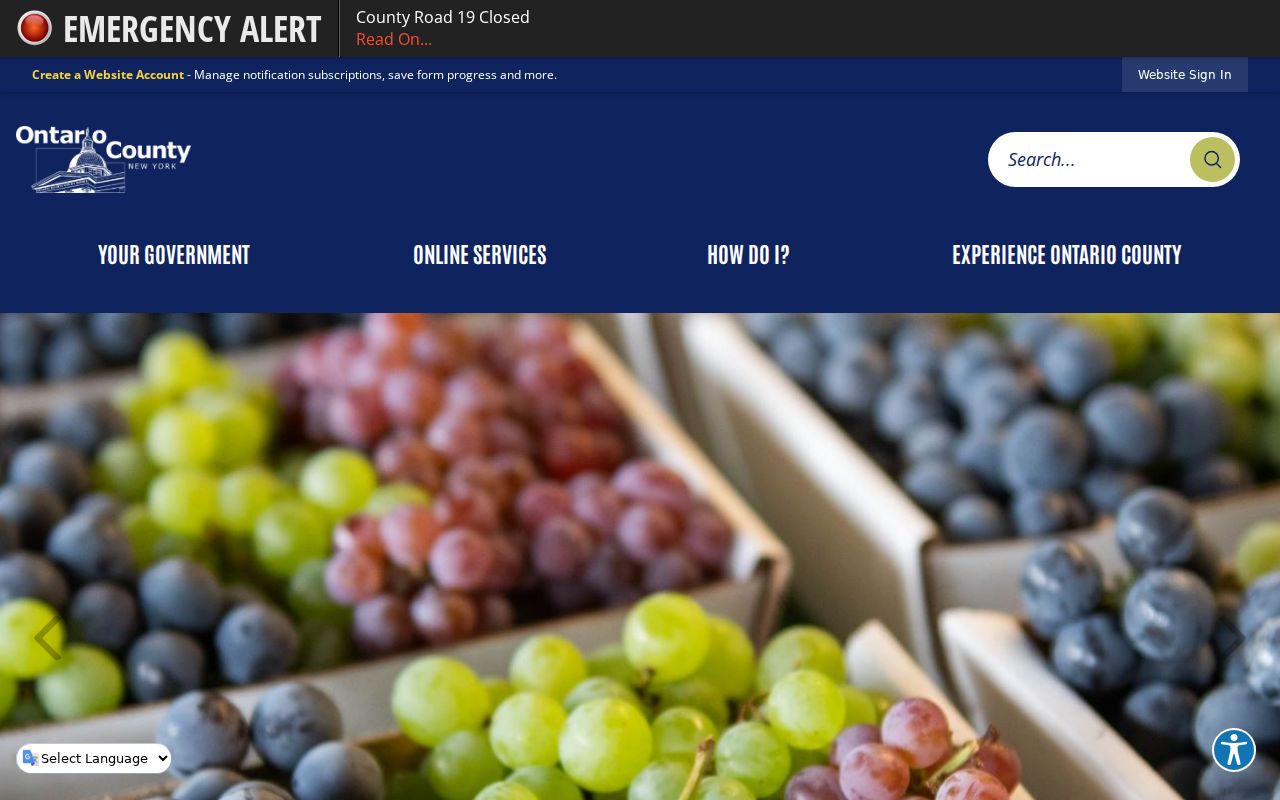
That county directory helps route a request to the clerk, sheriff, jail, probation office, or archives without treating their records as interchangeable.
Ontario County IQS Record Search
The County Clerk's IQS instructions direct visitors to log in as a guest, select General Criteria, and choose “Civil / Criminal Case Name.” Enter a person's name in Last First order. A blank Recorded Date searches all available dates. Document Types may stay at All Document Types or be narrowed. Clear the form before starting a new search. IQS is a filing index and image service, not a fingerprint record or a complete index of every local court.
| IQS field | How to use it | Required |
|---|---|---|
| Login | Select Guest; subscription options may also appear | Yes |
| Search Type | Choose Civil / Criminal Case Name | Yes |
| Name | Enter Last First Middle | For a name search |
| Recorded Date | Leave blank for all dates or use MM/DD/YYYY | No |
| Document Types | Keep all types or select a narrower set | No |
The Ontario County Clerk record-custody page identifies the office that keeps Supreme and County Court criminal files.
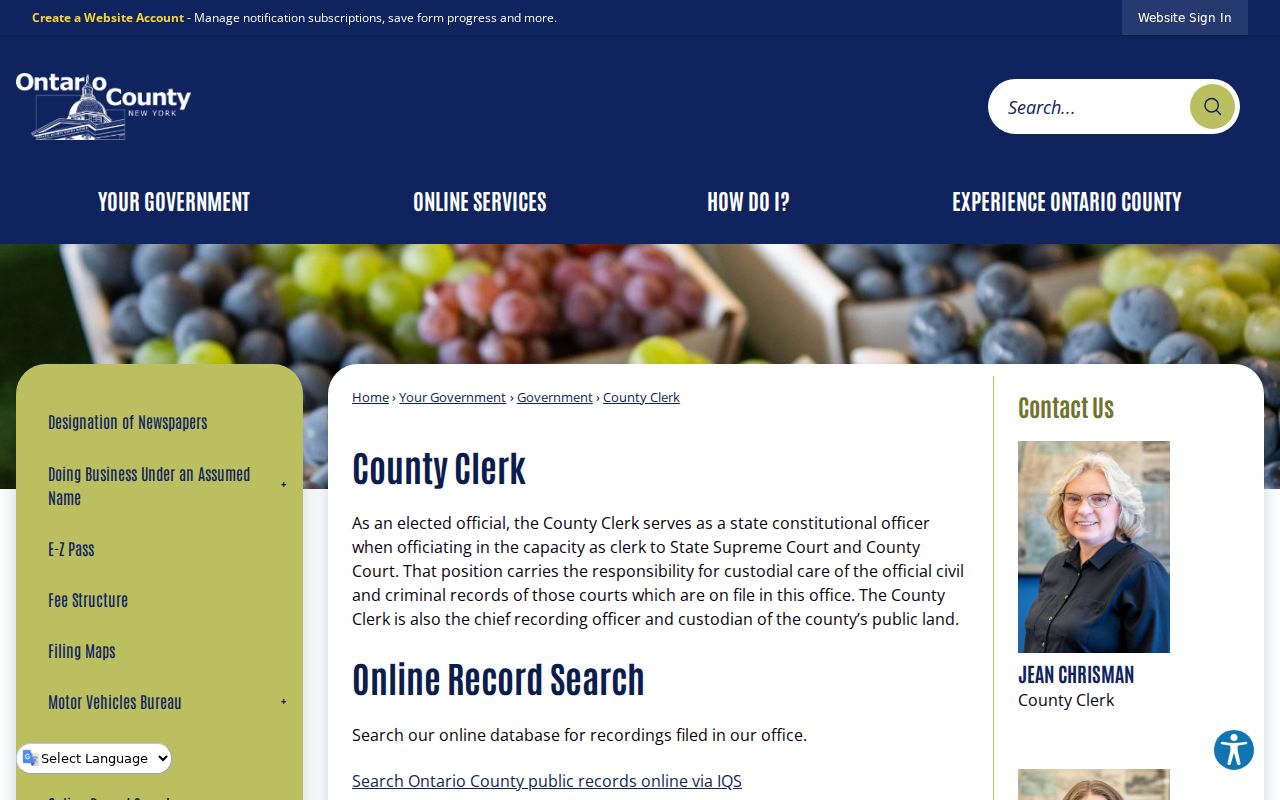
This screen points from an online index result to the clerk who can supply the underlying plain, certified, or exemplified court copy.
New York Official Background Checks
DCJS Personal Record Review is the authoritative fingerprint-based route for a person to inspect their own New York criminal history. IdentoGO sends fingerprints to the New York State Division of Criminal Justice Services. Service code 15464Z requests a suppressed response, which omits sealed or suppressed material. Service code 15465F requests an unsuppressed response, which can show such material to the subject. A person or that person's attorney may request the review. It is not a public search for someone else's rap sheet.
OCA Criminal History Record Search is a different product. It searches an exact name and date of birth against qualifying public court records and costs $95 for each name, alias, and date-of-birth combination. It can omit sealed matters, noncriminal violations, specified older single misdemeanors, pardoned cases, and some files lacking a final disposition. A “no results” response therefore has a narrower meaning than a fingerprint-based no-record response. The FBI also offers its own fingerprint-based Identity History Summary for self-review of federal data.
Note: Confirm current IdentoGO sites and charges in the live scheduler, since the research did not establish a fixed Ontario County location or total fee.
Ontario County Records Office Map
Ontario County record custody is split between downtown Canandaigua and the County Complex in Hopewell. The County Clerk keeps Supreme and County Court records at 20 Ontario Street. Sheriff Records handles sheriff police and accident reports at 74 Ontario Street. The jail, probation office, and archives are separate operations at the County Complex. Calling the right office first matters because the Clerk does not accept phone searches, and Archives does not replace the department that still owns an inactive file.
Ontario County Clerk
20 Ontario Street
Canandaigua, NY 14424
585-396-4451
Supreme and County Court records
Sheriff Records
74 Ontario Street
Canandaigua, NY 14424
585-396-4618
Sheriff reports and agency records
The county's Sheriff office page confirms the current headquarters route for records and law-enforcement services.
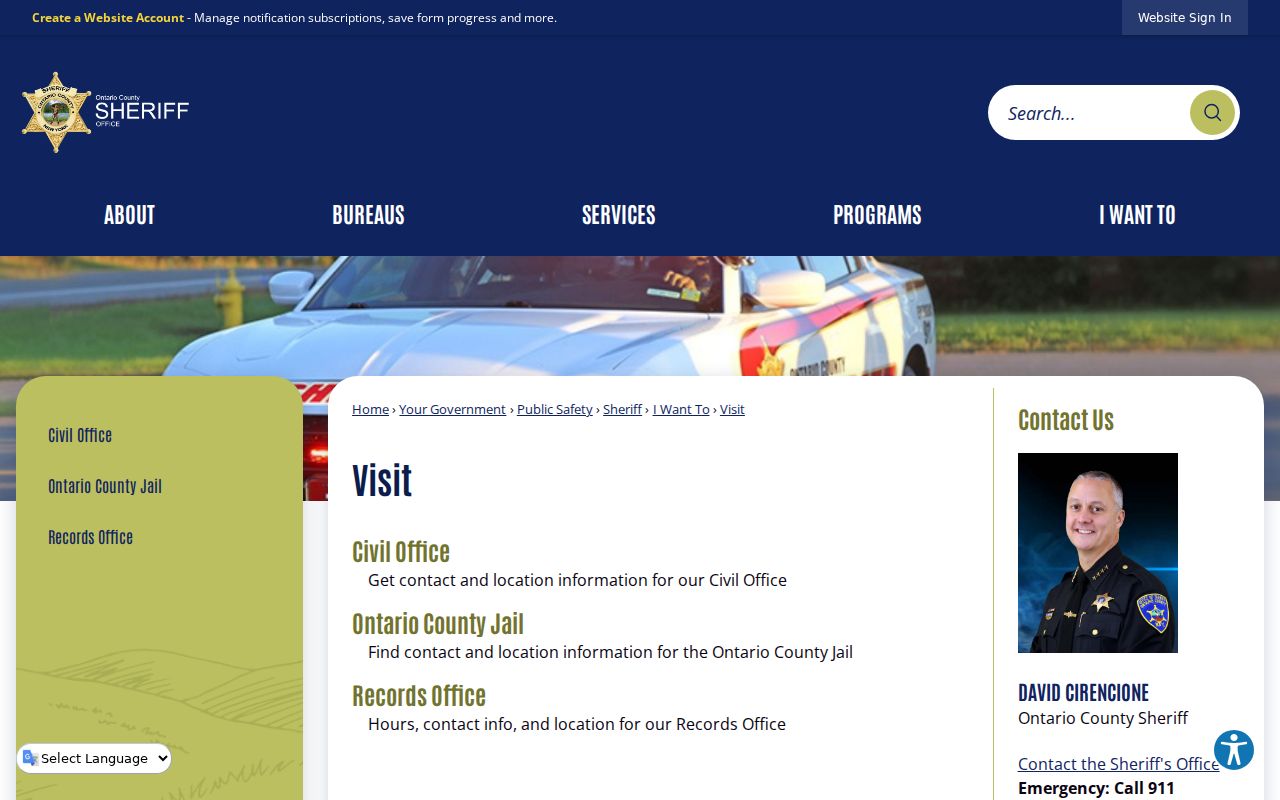
The pictured county page is useful because some older material still reflects the office's temporary move during the 2018 to 2019 renovation.
Criminal Record Types
A single Ontario County event can create records at several offices. Police document the incident and arrest. The jail records intake and release. A prosecutor evaluates the allegations, then a court file tracks the charge as filed, motions, plea or trial, disposition, and sentence. Fingerprintable arrest cycles also move to DCJS, where later prosecution and court reports should close the cycle. Name differences, a changed charge, or a late disposition can make the files disagree.
- Incident and arrest reports: held by the sheriff, Geneva Police, Canandaigua Police, State Police, or another agency that made the record.
- Booking records: created by Ontario County Jail for custody, intake, bail, housing, transfer, and release activity.
- Court files: held by County Court, Supreme Court, a city court, or the proper town or village Justice Court.
- Rap sheets: fingerprint-linked DCJS histories available to the subject or the subject's attorney through Personal Record Review.
- Supervision records: divided between Ontario County Probation and DOCCS parole or post-release supervision.
Registry listings, warrant entries, police reports, and custody records also have distinct rules. Ontario County sex offender records use a public Level 2 and Level 3 directory and a separate Level 1 telephone channel.
Ontario County Criminal Record Meanings
Words that look alike can point to very different legal events. A booking charge reflects intake information. A filed charge appears in an accusatory instrument. A conviction is the result of a guilty plea or verdict, while a disposition is the recorded outcome of a charge or case. Reading those terms in context helps explain why an early police allegation may not match the later court record.
- Accusatory instrument
- A complaint, information, felony complaint, or indictment that formally alleges an offense.
- Arraignment
- The court appearance where charges are stated and plea and release issues are addressed.
- Disposition
- The final recorded result, such as conviction, dismissal, or acquittal.
- Certificate of disposition
- The originating court's certified statement of the case outcome.
- Sealing
- A legal restriction that blocks eligible records from ordinary public access.
Ontario County Probation can appear in the paper trail after a sentence or during pretrial services, but its case notes are not an open name-search product. The official Probation page describes the county's supervision and pretrial roles.
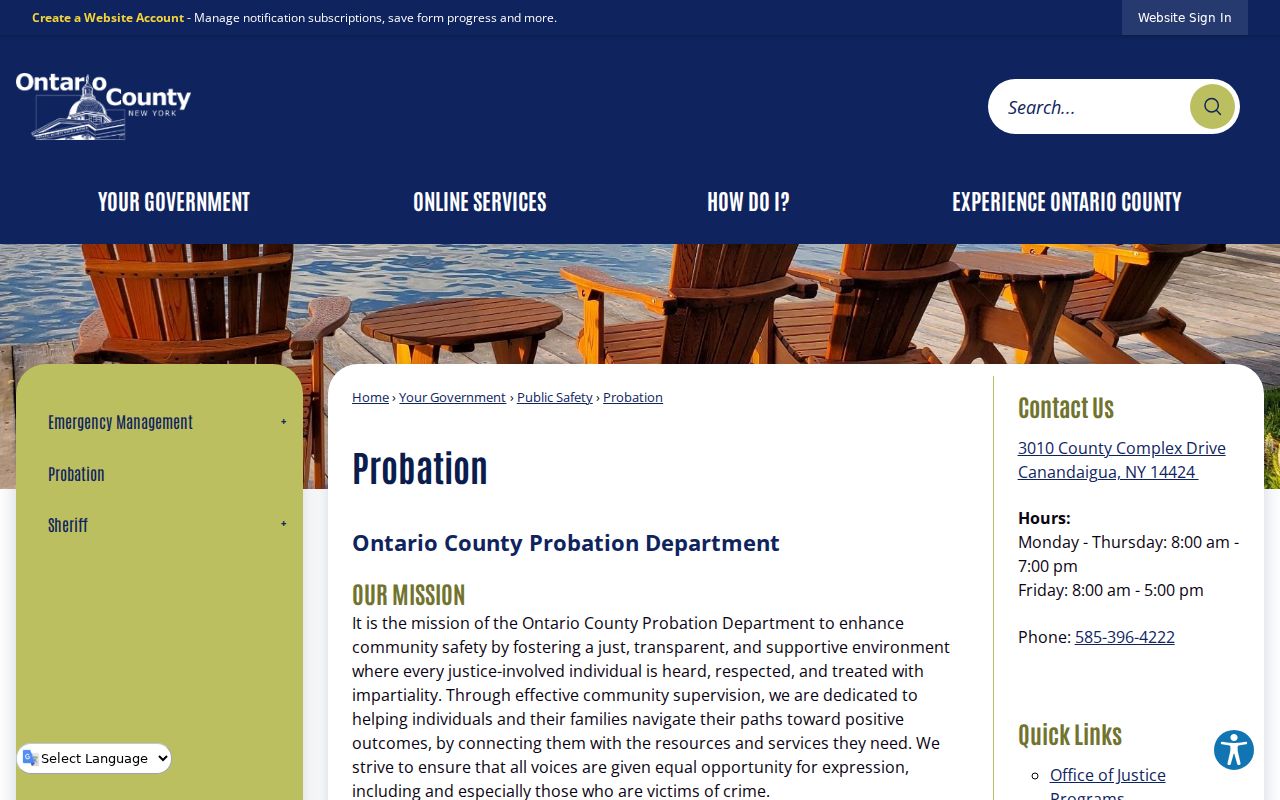
That county source helps separate a public court disposition from the private work of supervision, screening, and presentence investigation.
Inside an Ontario County Criminal Record
The fields depend on the record holder. DCJS organizes fingerprinted arrest cycles and later reports from prosecutors and courts. A court docket is event-centered. A jail file is custody-centered. Names and aliases may connect entries, but a public name-based match is not the same as fingerprint confirmation. Dates, identifiers, court names, and final outcomes should all be compared before assuming two entries concern the same event.
| Name and identifiers | Name, aliases, date of birth, and agency identifiers where disclosure is lawful |
|---|---|
| Arrest and booking | Arresting agency, event or booking number, intake date, initial charge, bail, hold, and release |
| Court case | Docket number, court, filed charges, appearances, motions, judge, counsel, and status |
| Disposition | Dismissal, acquittal, guilty plea, verdict, or another final result for each charge |
| Sentence | Custody, probation, fine, restitution, or other terms imposed after conviction |
| Supervision | Probation, parole, post-release status, or transfer details within public limits |
Victim details, juvenile information, grand-jury minutes, sealed counts, medical facts, confidential sources, and active investigative material may be withheld or redacted. The record's source controls both its scope and its access rules.
Ontario County Court Search Gaps
An empty County Clerk or WebCriminal result is not conclusive. Canandaigua and Geneva City Courts keep their own local files. Town and village Justice Courts also maintain dockets for misdemeanors, violations, traffic cases, arraignments, and felony preliminary work. A felony may begin in a local court, then move to Ontario County Court after indictment or another superior-court route. The early and later records can remain with different clerks.
Start with the place and court named on the appearance ticket or case paper. Ask the local clerk for the docket or a certificate of disposition when electronic coverage fails. Use IQS for the County Clerk index, WebCriminal where coverage exists, and NYSCEF only for covered e-filed matters. OCA CHRS adds a statewide name and date-of-birth search but is neither certified nor complete. More detail on filed charges, pleas, outcomes, and sentencing appears in the Ontario County criminal court cases resource.
Note: A certificate of disposition comes from the originating court, not from IQS, WebCriminal, DCJS, or the OCA CHRS report.
Public Access Laws in New York
New York's Freedom of Information Law governs agency records, including police materials, subject to statutory exemptions and redaction. Court files follow judicial access rules instead. A sheriff report request goes to Sheriff Records, while a court case request goes to the clerk that holds the docket. DCJS criminal histories are not public third-party rap sheets. The Sex Offender Registration Act creates a separate disclosure system based in part on risk level.
Key statutes:
Public Officers Law Article 6 gives access to agency records subject to FOIL exemptions and response rules.
Judiciary Law §255 governs lawful searches and copies by clerks of courts of record.
Executive Law §837 defines DCJS repository duties without opening a public third-party rap-sheet search.
CPL §160.50 generally seals records after a criminal case ends in the accused person's favor, subject to exceptions.
Correction Law Article 6-C sets sex-offender registration, risk-level, notification, and disclosure rules.
A FOIL request should describe an existing record by date, location, report number, agency, and record type. FOIL does not force an office to create a new answer or list. Privacy, safety, active-case, juvenile, sealed-case, and investigative exemptions can limit release.
Ontario County Warrant Checks
No comprehensive official public Ontario County warrant portal was identified through county sources. A bench warrant may arise after failure to appear or failure to follow a court order. An arrest warrant rests on a judicial finding tied to an accusation. Search warrants concern a place or property and often remain sealed while an investigation is active. Civil warrants of eviction should never be confused with criminal warrants.
Contact the court that may have issued the warrant. County Court handles felony matters, while a city, town, or village court handles its local case. Sheriff non-emergency at 585-394-4560 can give safe instructions. Do not arrive without notice based only on an online entry. An unexecuted or sealed warrant may be withheld when release would impede enforcement. Only the issuing court can recall or vacate its warrant, and payment to another office does not ensure that every system updates at once.
Sealed, Expunged, and Restricted Records
New York mainly uses record sealing. CPL 160.50 generally seals police, prosecutor, and court records after a favorable termination, such as dismissal or acquittal, subject to exceptions. CPL 160.55 covers specified violation outcomes. Youthful-offender adjudications receive protection under CPL 720.35. CPL 160.58 addresses certain substance-use-related convictions, while CPL 160.59 permits an application to seal up to two eligible convictions, no more than one felony, after the statutory period. New York uses true expungement for specified marijuana records.
The Clean Slate Act took effect on November 16, 2024, and gives OCA up to three years to implement automatic sealing of eligible convictions. General waiting periods are three years for eligible misdemeanors and eight years for eligible felonies, calculated under the statute. New charges can pause the clock, and sex offenses and most Class A felonies are excluded. DCJS may still show a conviction until it receives the court's sealing order.
After any order, obtain a certified copy, allow time for processing, check the public court interface, and request a suppressed DCJS self-review. If a record remains public in error, send the order to the office that maintains the bad entry. Court, police, jail, and DCJS systems may update on different schedules.
Ontario County Jail Transfer Search
The Ontario County Jail at 3045 County Complex Drive has no stable public roster documented by the official county sources reviewed. For a recent booking, call 585-396-1800 or 315-781-1966. A missing name can mean release, an appearance ticket, a transfer, a spelling issue, juvenile confidentiality, or no county-jail intake. A narrowly framed records request can seek booking details that staff cannot provide by phone, subject to privacy, sealing, and safety limits.
Once a person enters state prison, switch to DOCCS Incarcerated Lookup. DIN or NYSID gives the clearest search path, while name and birth year support a name search. DOCCS can show facility, commitment county, crimes, sentence, release eligibility, and transfer or release history within its rules. Parolee Lookup covers state community supervision. VINE can supplement those sources with custody-change notices.
OntarioSheriffNY is verified for visit scheduling, not as a public inmate or warrant database. Appointments may also be made by phone or in the jail lobby. The broader Ontario County arrest lookup route explains how agency reports, bookings, court records, and DCJS cycles connect.
Ontario County Justice Navigator
The Ontario County Justice Navigator Program is a voluntary source of peer and process support. It can connect a participant with services, help with appointments, attend court or probation meetings when asked, and make links to Drug Court or Mental Health Court resources. It cannot give legal or clinical advice, influence a judge, perform a competency evaluation, or act as the diversion program itself. Those limits matter when reading a docket: a treatment-court or support entry does not make private case notes public.
The official Justice Navigator page states the program's local role and its boundaries.
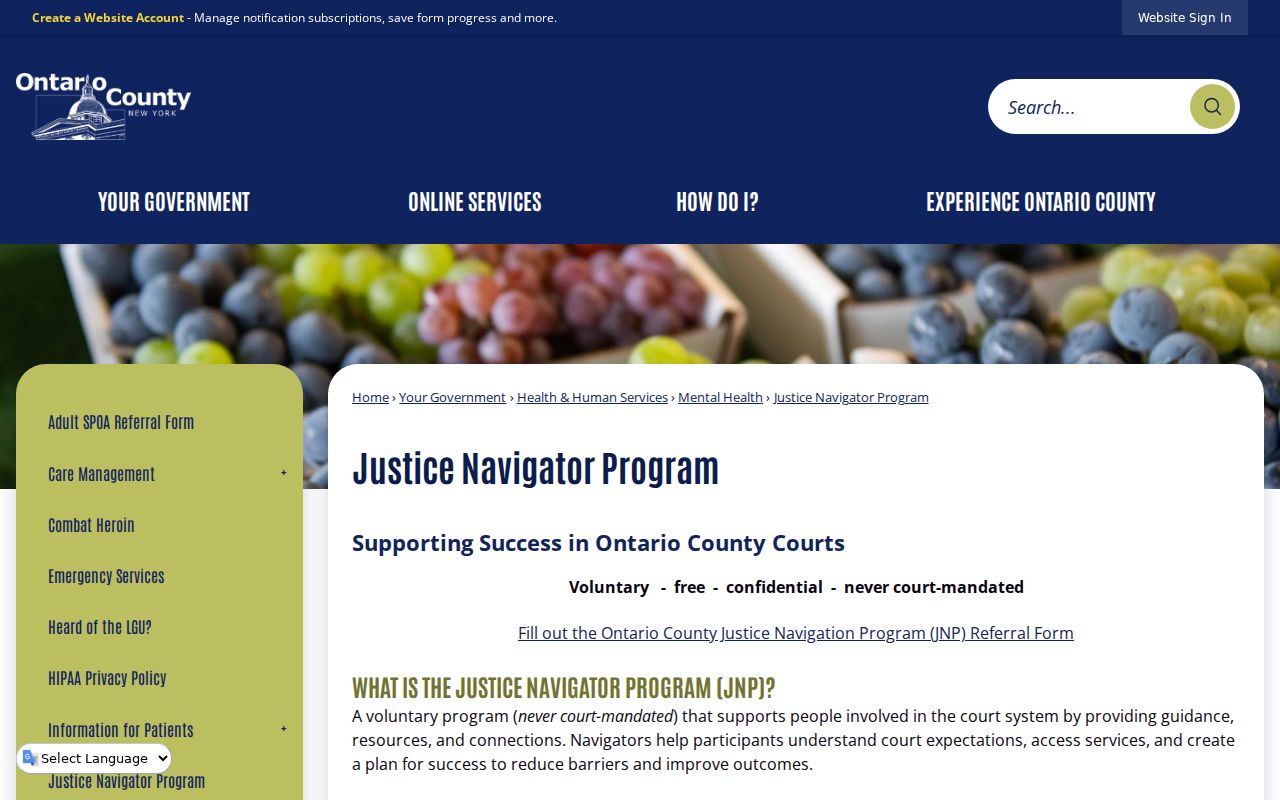
This local program adds a path for help with court steps without changing who holds the public criminal record or who can alter a case outcome.
Ontario County Criminal Records by City
Ontario County has two incorporated cities. Geneva is the larger, while Canandaigua is the county seat. Each city police department keeps its own incident and arrest reports, and each City Court holds local criminal matters. A custodial city arrest can also create a booking at the county jail in Hopewell. Felony work may later move to County Court in Canandaigua, so a city search often needs both municipal and county sources.
Geneva Criminal Records
2020 population 12,812 · Geneva Police and Geneva City Court hold the first local records.
Canandaigua Criminal Records
2020 population 10,576 · City Police, City Court, and county justice offices have distinct files.
Historic Ontario County Criminal Files
Ontario County's archival criminal record reaches far beyond modern portal coverage. County Court series begin in 1793, with most material dating from 1847 through 1942 and later records through 1974. The collection includes 22 volumes, six indexes, and 11.23 cubic feet of material. Researchers may see Court of Sessions records, writs, and capias terms from legal systems that predate the modern County Court created by the 1846 Constitution.
The Ontario County Records and Archives page explains appointments, inactive records, and the need for the originating department's permission in some cases.
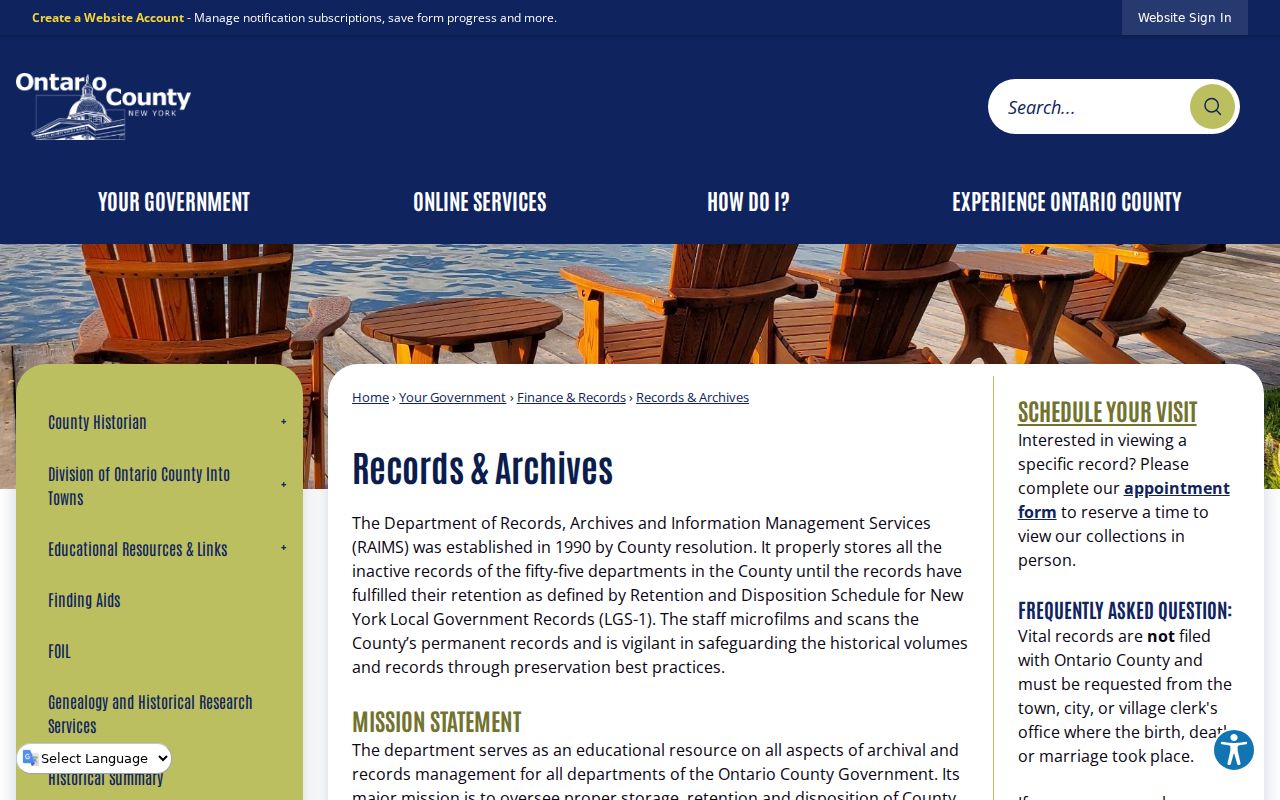
The archive source is especially useful for genealogy and local justice history, but it does not replace the active court or agency custodian for a current file.